Wendy Berger · 4 September 2026
Analyzing Recovery Patterns in Niche Digital Platforms After Infrastructure Shifts
Digital platforms operating in specialized markets often face infrastructure shifts that include cloud migrations, server architecture updates, and API overhauls, and analysts track how these changes influence operational stability over time. Researchers monitor key indicators such as user session duration, data throughput rates, and error log frequencies to map recovery trajectories after such transitions occur.
Defining Infrastructure Shifts in Niche Environments
Niche digital platforms typically serve targeted user groups with customized tools, and infrastructure shifts arise when providers move from on-premise servers to distributed cloud systems or implement containerized deployments. Data from multiple case reviews shows that these modifications can temporarily disrupt service continuity while teams adjust load balancing configurations and security protocols.
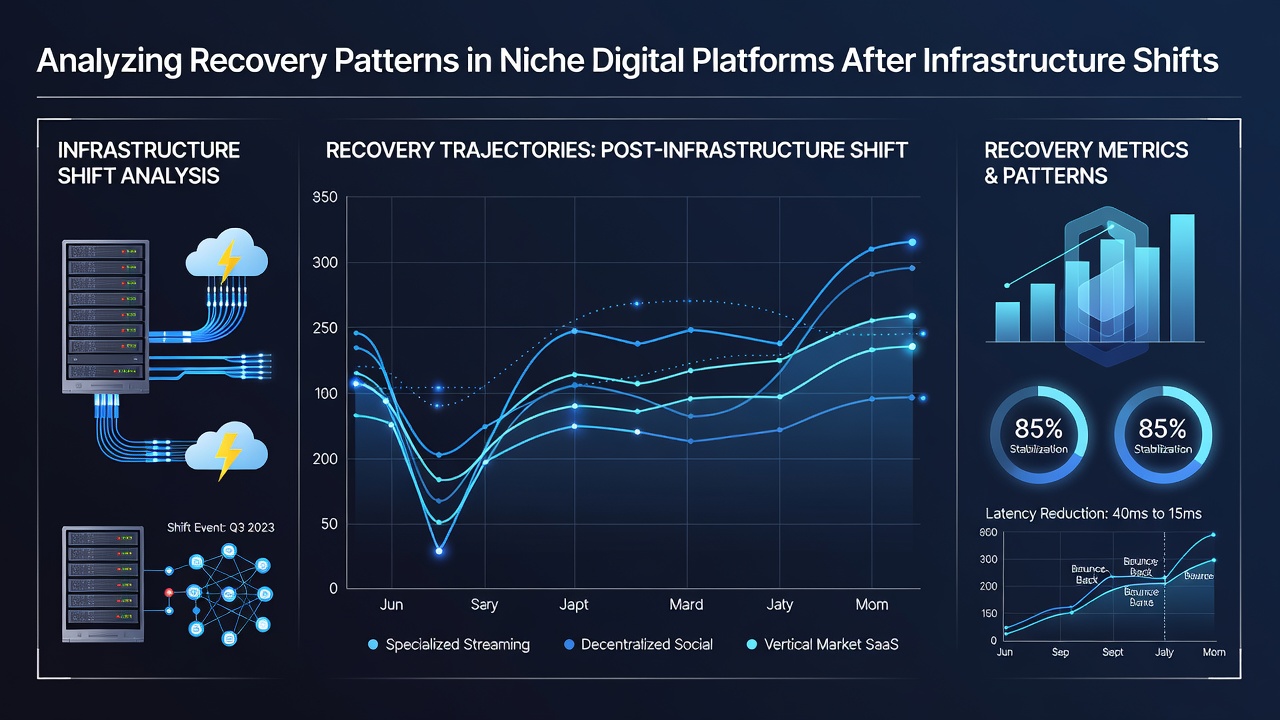
Observers note that recovery patterns emerge within weeks when platforms maintain detailed change logs and conduct phased rollouts, whereas abrupt full-scale transitions correlate with extended periods of reduced functionality. Studies conducted through 2025 highlight how niche platforms in education and creative tools sectors experienced measurable rebounds in performance metrics after adopting hybrid infrastructure models.
Key Metrics for Tracking Recovery
Teams evaluate recovery through quantitative measures including page load times, API response latencies, and database query efficiencies, and they compare pre-shift baselines against post-transition values collected at regular intervals. Figures from industry reports indicate that successful recoveries often feature a return to 85 percent of original throughput levels within 30 days when monitoring systems flag anomalies early.
Additional variables such as user authentication success rates and third-party integration stability provide further insight into overall platform health, while segmentation of data by user geography reveals regional differences in adaptation speeds. As of September 2026, aggregated datasets continue to show that platforms incorporating automated failover mechanisms achieve faster stabilization compared with those relying on manual interventions.
Observed Patterns Across Multiple Platforms
Analyses of several niche platforms reveal distinct phases in recovery, beginning with an initial dip in activity followed by gradual normalization as caching layers and content delivery networks recalibrate. One study revealed that platforms handling media uploads required additional optimization steps to restore upload speeds, yet those adjustments led to sustained improvements beyond original capacities in some instances.

Patterns also differ based on the scale of the shift, with minor updates producing quicker rebounds and comprehensive overhauls demanding coordinated efforts across development and operations teams. Evidence from longitudinal tracking shows that platforms which scheduled infrastructure changes during lower-traffic windows recorded fewer prolonged outages, allowing resources to focus on fine-tuning rather than emergency responses.
Factors Influencing Recovery Timelines
Platform size, team expertise, and prior investment in monitoring tools shape how quickly systems regain equilibrium after infrastructure adjustments, and data shows that organizations with established incident response frameworks encounter fewer cascading issues. External elements like regulatory compliance requirements in different jurisdictions add layers of complexity that can extend testing phases before full deployment.
According to findings published by the National Institute of Standards and Technology, standardized frameworks for cloud transition planning contribute to more predictable recovery outcomes across varied digital environments. Meanwhile, reports from the Australian Cyber Security Centre emphasize the role of continuous logging in identifying bottlenecks during the stabilization period.
Comparative Analysis of Recovery Strategies
Platforms that employ rollback capabilities demonstrate shorter recovery windows because they can revert to stable configurations when new setups encounter unexpected conflicts, and this approach allows continued data collection without halting all operations. In contrast, those committed to forward-only migrations must allocate extra time for debugging live environments, which affects user-facing features during the process.
Research indicates that cross-functional collaboration between engineering, security, and analytics groups accelerates identification of root causes, leading to targeted fixes rather than broad system restarts. Platforms in creative and productivity niches particularly benefit from these coordinated efforts because their users depend on consistent access to specialized datasets and collaborative features.
Conclusion
Recovery patterns in niche digital platforms after infrastructure shifts follow identifiable sequences driven by preparation, monitoring, and adaptive responses, with available data underscoring the value of phased implementations and robust logging practices. Continued observation through late 2026 and beyond will likely refine these understandings as more platforms document their experiences with evolving technologies.